Friday, 4 October 2013

What to do with tons of plums including a great plum jam


I've been meaning to write this post for a couple of weeks which means that probably all your plums will have fallen but you may still be able to find some in the shops. And, if not, hopefully it will be useful for next year.

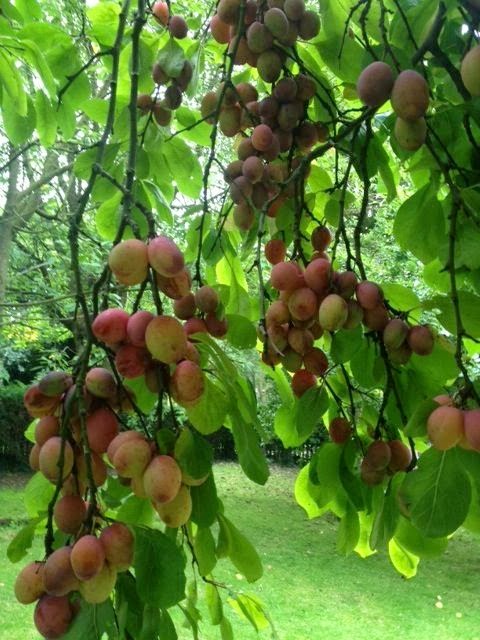
A fortnight ago we spent a weekend with some old friends (old as in we've had them for a long time not that they're ancient) who had a plum tree that was absolutely laden with fruit.

We'd thought of doing a bit of preserving but ended up having to think of other ways we could bring plums into the day's eating which included supper for nine.

This is what we made:

Roast plum relish and salsa

A plum salsa from Hugh Fearnley Whittingstall's Guardian column. We didn't have any lime so I used lemon. This was really good - I'd definitely make it again. We had it with chicken but it would be even better with lamb.

A roast plum and onion relish to go with the cheeseboard. Just because I wanted to see how it would turn out if you roasted plums. Slightly dull is the answer. Don't bother.


Baked amaretti plums from a Woman and Home recipe for which we used an ancient (and on this occasion I do mean really old) bottle of cream sherry rather than the recommended marsala. Also delicious and incredibly easy.


A spiced plum chutney from the Woman and Home site. We didn't have any raisins so we used a mixture of dried cherries and cranberries. It tasted pretty good when we'd finished but it needs to mature another couple of weeks.

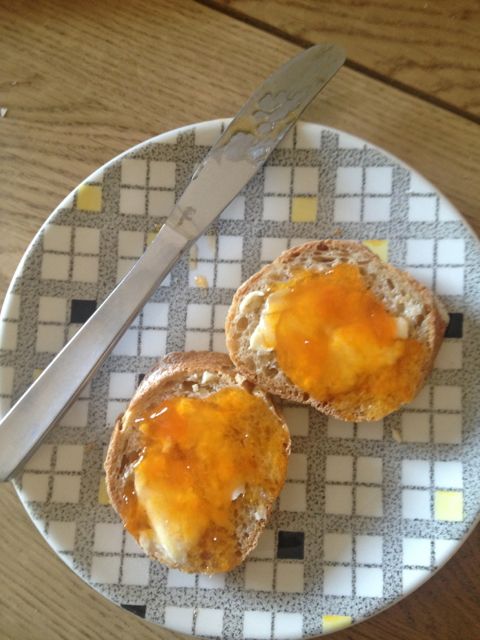
And this incredibly good (though I say so myself) plum jam which I invented largely to compensate for the plums' lack of flavour. The pomegranate molasses made it so don't leave it out and it needs the cinnamon too. Note there's far less sugar than in most recipes so it'll be a bit runny but add more if you want.


Plum and pomegranate jam
Makes about 4 x 400g jars

1 kg plums
250g preserving sugar
300g granulated sugar
3 tbsp pomegranate molasses
6-8 cardamom pods, lightly crushed
1 tsp ground cinnamon
100ml water

Halve the plums, twist and remove the stones, then cut into 2 or 3 pieces. Place in a large saucepan or preserving pan with the sugars, pomegranate molasses, cardamom pods, cinnamon and water. Place over a very low heat until the sugars have completely dissolved then bring to the boil and boil hard for about 15 minutes until the jam is set. Skim off any scum, fish out the cardamom pods, rest the jam for 10 minutes then pot into hot, sterilised jars*.

* If you don't know how to sterilise jars there's a useful post here.


Tuesday, 20 August 2013

The tomato salad that turned into an aubergine bake


You'll have to allow me the pleasure of crowing about this dish - a rescue remedy for a leftover tomato salad.

I'd always taken the view that salads were unrescuable. Of course you could finish off the leftovers but not turn them into anything else. Or nothing that my husband would eat anyway, having an aversion to cold soups like gazpacho.

But we had so much left over I couldn't bring myself to throw it away so I tipped it into a pan and just simmered it until it took on a jammy consistency. And you know what? It didn't taste bad.

I then decided to use up another couple of leftovers - a couple of aubergines and some Comté to make an aubergine bake which would have actually fed 4 at a pinch, certainly three but the two of us scoffed the lot. Here's roughly how it was done

2 medium sized aubergines
About 300g leftover tomato salad cooked down to a sauce or homemade tomato sauce made from 1 onion cooked in a little oil until soft,  1-2 crushed cloves of garlic and 1/2 a 400g can of chopped tomatoes
Any stray herbs - I had a bit of fresh basil
About 4-5 tbsp olive oil
75g-100g Comté, Gruyère, or other leftover cheese plus a little parmesan if you have some
Salt and pepper

Cut the stalk off the aubergine and slice into 4 lengthways. Salt generously and set aside for half an hour or so. Cook down the tomatoes or make a simple tomato sauce - or even use a jar of pasta sauce if you have one knocking around that needs using up. Add a bit of extra garlic and chopped herbs if you like.

Rinse the aubergines and pat dry with kitchen towel. Heat a couple of tablespoons of the oil in a large frying pan and fry half the aubergine slices until browned, turning them a couple of times. Press them against the sides of the pan as you remove them to let as much oil run out as possible and repeat with the remaining aubergines. Warm through the sauce and adjust the seasoning.

Heat the oven to 200°C. Lay half the aubergines in a shallow dish and top with half the sauce and grated cheese. Repeat with the remaining ingredients, finishing with some grated parmesan if you have some. Pop in the oven for 20 minutes and bingo - there's your parmigiana. (Actually, you might want to flash it under the grill for an extra-crisp topping and grate over a bit more parmesan to serve. Oh, and a green salad on the side wouldn't go amiss.)

What's your most triumphant use of leftovers?

Monday, 12 August 2013

Are fritters the way to get fussy kids to eat veg?


Coincidentally I came across fritters twice last week - once in Caroline Conran's superb 'Sud de France' which I've been working my way through down in the Languedoc, the other at a neighbour's house when she invited us over for an impromptu lunch. And the dish that her grandchildren tucked into most avidly was the courgette (zucchini) fritters.

Of course I'm not suggesting you fry every vegetable in sight to get kids to eat their greens - and other veg for that matter - but you have to admit it's a good way to win round recalcitrant eaters. And they're cheap. You can have them on their own with a dip or salsa or as an accompaniment to stretch a piece of meat or fish.

Having mastered courgettes I then tried some Santorini-style tomato fritters but they were a great deal more fiddly and no tastier, to be honest. And with courgettes bang in season at the moment, I reckon that's the place to start your fritter-frying. Here's my slightly tweaked version of Caroline's recipe. She just used onion so you don't have to add the garlic, chilli and mint if you don't want though I like the kick it gives them.

Courgette fritters
Serves 2-3 adults or a couple of adults and 2 kids

350g courgettes
4 tbsp sunflower oil or other oil for frying
1 small onion, finely chopped
1-2 cloves of garlic, finely chopped
1/2 tsp chilli flakes (optional)
2 tbsp finely chopped fresh mint or a good pinch of dried mint or herbes de Provence
2 eggs
2 rounded tbsp plain flour, sifted
Salt and pepper

Wipe and top and tail the courgettes and grate coarsely. Put them in a colander and salt generously. Leave for 20 minutes then rinse. Take handfuls of the courgettes, squeeze and place on a clean tea towel. Twist the tea-towel to extract as much liquid from the courgettes as possible.

Meanwhile heat a tablespoon or so of oil and soften the onion in it for about 10 minutes. Add the chopped garlic towards the end of the cooking time then the chilli flakes and mint or other herbs, if using. Tip onto a saucer or plate and set aside to cool.

Beat the eggs and add the sifted flour bit by bit, whisking as you go. You want a thick-ish batter. Season with pepper.

When you're ready to serve the fritters, mix the grated courgettes and onion mix into the batter and add a little salt. Heat the remaining oil over a moderate heat and fry the fritters in batches - about 4 tbsp of mixture to the pan. Flip them over after about 2 minutes and cook the other side. When they're nicely browned and crisp transfer them to a plate lined with kitchen towel to drain off the oil and serve as soon as possible - with fish or meat as suggested above or with tomato salsa or tzatziki (cucumber and yoghurt dip) which would also work well.

I reckon you could add a tablespoon or two of grated parmesan to the mix if you have some or even some crumbled feta for a more substantial meal.


Do - or would - fritters go down well with your kids?

Saturday, 27 July 2013

Apricot and cardamom jam


I can't believe I've got to the age I have (don't ask!) without ever having made a pot of jam. Marmalade, yes, as regulars may recall from this post but jam and chutney, never. Which makes no sense considering the cost of good preserves these days - about £3.50-4 a small jar in farmers' markets and posh delis.

I decided this year was going to be the year to break my duck and lugged down a large bag of jars and an armful of preserving books to our house in the south of France. After all fruit and veg is cheap down here so it sounded like a good holiday project.

It's actually been so hot for the last few days I couldn't face it but yesterday I made my first batch of apricot jam (my favourite) based on a recipe in my friend, cookery writer Thane Prince's Jams and Chutneys. Needless to say I couldn't resist going off-piste a little - I like my jam slightly less sweet than most and had this hunch that cardamom would be a great addition (it is!) but Thane's recipe gave me an excellent basis to work on.

Apricot and cardamom jam
Makes about 4 x 400g jars

I kg of apricots (not over-ripe which shouldn't be a problem in the UK as they never are)
Juice of 1-1 1/2 lemons (about 4-5 tbsp)
8 green cardamom pods, lightly crushed
900g jam sugar (with added pectin. If you like your jam tart you might even be able to do with a little less)

You will also need 4-5 350g-400g sterilised jam jars and a cold saucer to test the set


Wash the apricots and quarter or halve them depending on how large they are. Put in a large saucepan or preserving pan with the lemon juice, crushed cardamoms and 400ml water and bring slowly to the boil. Turn down the heat and simmer for 10-15 minutes until the apricots are soft but still retaining their shape, skimming off any scum (that sounds horrible doesn't it? Let's call it froth) that appears on the surface.

Turn off the heat and tip in the sugar and gently stir then leave the pan for a couple of minutes off the heat for the sugar to dissolve. Gradually back to the boil and boil hard for 5 minutes or so until the jam looks like setting, skimming off the scum (sorry, froth) as you go. Take the pan off the heat and spoon a little onto your chilled saucer. Leave it a minute then run your finger through it. If it's set it should crinkle slightly. If not boil (the jam, not your finger) for 3-4 minutes more.


Once the jam is set take off the heat. Warm the jars in a moderate oven. Stir the jam then ladle or pour into the hot jars. Seal with the lids or a cellophane jam jar cover, wiping the outside of the jar with a damp cloth. Label once cool. Slather over baguette and French butter. Drool.

Just a wee taster to make sure it's OK ...

Cost? Apricots around €2.60 a kilo, sugar 1.28€ a kilo bag (I used slightly less), lemon about .30€ and cardamoms I already had so roughly 1€ (86p) a jar for the most heavenly scented apricot jam you can imagine. Can't wait to make more.


Are you also a novice or a regular jam maker and what are your favourite jams?

Saturday, 22 June 2013

Hugely versatile broad bean and herb salad


I love recipes you rustle up from what you have in the fridge, freezer and storecupboard. It lends a creative edge to cooking that you never get when you've gone out to buy exactly the right ingredients for a recipe.

I bought some tongue from Hobbs House butchery when I was there for a cookery course yesterday and was thinking what would go well with it. Salsa verde would have been a good accompaniment if you were serving it hot so why not, I wondered, use some of those flavours in a salad?

Broad beans are in season but you know what? They're expensive to buy and incredibly labour-intensive to prepare with larger beans needing to be skinned so I used a pack of frozen broad beans I had in the freezer. I added a couple of spring onions, sweated off in a little olive oil, some chopped gherkins and juice from the pickle jar and some chopped parsley and mint (very important the mint) and bingo!

I can think of a few good variations (see below) but in the meantime try this as your base:

Serves 2-3

250g frozen (or fresh podded broad beans if you grow them yourself)
3 tbsp olive oil
half a bunch of spring onions, trimmed and sliced
about 5-6 gherkins, finely chopped + some juice from the pickle jar
2 heaped tbsp freshly chopped parsley
1 heaped tbsp freshly chopped mint
Salt and pepper, preferably white

Bring a pan of water to the boil, salt and cook the broad beans for about 3 minutes until tender. Drain and rinse in cold water. Heat the oil and cook the onions gently until soft. Tip in the broad beans, finely chopped gherkins and herbs, season with salt and white pepper. Either eat as a veg (it would be great with roast lamb) or a warm salad with cold meats or cheeses (see below)

What else you could add. (Here's where it gets interesting):

*Some roughly crumbled goats or young sheeps cheese and a little grated lemon rind

* Give it a Spanish twist by adding some chopped chorizo when you fry off the onion - or add some shreds or serrano ham. I'd probably be inclined to leave out the mint in this case

* Add some steamed or boiled new potatoes, dice them and add them to turn it into a ritzed-up potato salad.

There are probably other possibilities. Any thoughts?

Sunday, 9 June 2013

5:2 Hot smoked salmon, avocado and asparagus salad


You might well have wondered what happened to the 5:2 diet which has been conspicuously absent from the blog lately?

Well, I'm still on it. Sort of. Six months on it's not as regular as it was - I've been busy and travelling a lot but have also found ways of keeping my weight under control without it simply by skipping the odd meal. However I managed to have a fast day last Sunday (no, not ideal) and again today as I'm off to Holland for 5 days next week. Which is bound to mean loads of cheese and Dutch baking.

Anyway if you're going to fast on a Sunday you might as well have something nice and this was tonight's supper, built around some leftover asparagus and some other bits and pieces in the fridge and storecupboard (See! Frugal habits die hard!). I made double the quantity but always think it's more useful to have quantities for 1.

Hot-smoked salmon, avocado and asparagus salad (275 calories)
Serves 1

75g cooked asparagus spears (trimmed weight) - or steam, simmer or microwave it and cool it. No oil or butter, obviously.
20g cooked fresh or frozen peas. Again, NO butter!
A good handful of rocket (about 30g)
A spring onion, trimmed and very finely sliced (optional - just flung it in 'cos I had some)
Half a small avocado (mine weighed 45g) roughly broken up
50g hot-smoked salmon fillet, flaked (I got mine from the Co-op*)
A few torn mint leaves. Not essential. Just because I had them.
1 tsp olive oil
A good squeeze of lemon

Cook the asparagus and peas if you need to and cool. Arrange the rocket on the plate, top with the spring onions and avocado. Arrange the asparagus on top and flake over the salmon. Tear over the mint leaves and scatter with the peas. Season with salt, pepper and a good squeeze of lemon juice. and drizzle over the oil (which I left out when I made it because I thought it might take the day's intake over the 500 calorie limit. I needn't have worried.)

*In the mis-named Truly Irresistible range. I could have resisted it if I'd wanted to. I'm hard after months of 5:2!

Friday, 7 June 2013

3 meals for two from a £1 bag of veg


Having bought a £1 bag of veg at the Feeding the 5000 event last Saturday I decided to make it the basis for the next day's meals - fortunately a quiet Sunday at home with just me and my husband to cook for. I decided I wouldn’t buy anything extra and make do with what we had in the house.

The tomatoes went into a tomato bruschetta - simply quartered, seasoned, anointed with olive oil and, at the last minute, a drizzle of balsamic (you could use a few drops of wine vinegar instead). Oh, and a sprinkling of fresh thyme - I didn’t have any parsley, basil or chives.  I split two of the rolls I'd also picked up, toasted them and rubbed a clove of garlic on the cut sides as the base. If I’d had some feta or goats cheese I’d have crumbled a bit on top.


I could alternatively have fried the tomatoes, added a dash of chilli sauce and served them with eggs for breakfast. Or turned them into a fresh pasta sauce or a tomato and rice salad like this one on the blog.

Next, what to do with the lettuce and leeks? I washed the lettuce and decided to make a soup with the outer leaves and two of the leeks along with a handful of frozen peas from the freezer to give it a bit more colour and texture. This is roughly the recipe I used though you could easily vary it. It was so delicious I'll make it another time.


Leek and lettuce soup

(enough for 3-4)

1 tbsp olive oil or other cooking oil
A slice of butter (20g or thereabouts)
2 leeks, trimmed and sliced or a large sweet onion
A handful of frozen peas (about 50g)
Outer leaves from a round lettuce, washed and roughly sliced
700ml vegetable or light chicken stock
sprig of fresh mint (optional but unnecessary if your peas are minted)
Salt and pepper, preferably white

Heat a saucepan over a moderate heat, add the oil and then the butter. Once the butter has melted, stir in the sliced leeks, put on a lid and cook over a low heat until the leeks begin to soften. Add the peas, cook for another couple of minutes then tip in the lettuce and the mint, if using and stir. Pour over the hot stock bring to the boil and simmer for about 10 minutes until the leeks and peas are cooked.

Take the pan off the heat and cool slightly then ladle the lettuce and a few other chunky bits into a blender or food processor. (Leave some behind for texture*). Whizz then return to the pan. Adjust the seasoning and reheat gently but don't cook it too long or you’ll lose the colour. If you had a little leftover cream to stir in at the end or some extra herbs to scatter that would be extra good.

You could also add some fried bacon or ham if you had some for the final heat-through which would make it more substantial. Even then we had enough for 4 bowls.


The remaining leek went into a favourite pilaf along with the mushrooms (could have sworn the recipe was on the blog but I can’t find it. It’s in the book though). It wasn’t as good as usual as I didn’t have any cashew nuts (I used walnuts instead which were a touch too bitter), had to use tomato paste instead of fresh tomatoes and had no fresh coriander.

As you can see it was all a bit brown, relieved only by the remains of the lettuce which I served as a salad with a yoghurt dressing (see below) and a slosh of hot pepper sauce which I acquired from a guy in a pub. As you do . . . Easily enough for 3 though, especially given the soup we had first.

What else could I have made with the mushrooms? A pasta sauce. Garlic mushrooms on toast. A sort of stroganoff if I’d had a dash of cream. Mushrooms à la grecque. And with the leeks? A frittata. Leeks vinaigrette, This smoked cod and leek chowder. Leek bhajis, maybe (I did think of that but didn’t have any gram flour).

The main thing, as I said at the beginning, was I didn’t buy anything I didn’t already have in the fridge or the storecupboard even if it meant altering an idea or a recipe. And that’s the whole point - to adapt what you cook to what you have available, which is easy enough to do assuming a basic set of spices and seasonings (though I accept this is tough on a really tight budget). For most of us though it’s primarily a question of not wasting what we have. And that’s what this event was all about.

What would you make from these ingredients?

For more information about Feeding the 5000 and Fare Share UK visit their websites. 

* Or, if you prefer or don't have a blender, just serve the veg un-whizzed which also preserves the colour better. (Note how the arty photography app Oggl I was playing about with also improves the look of the dish ;-)


** (1 tsp Dijon mustard, 1 tbsp cider or wine vinegar, 3 tbsp olive or other oil and 2 tbsp plain yoghurt - and a splash of water to thin it)

Sunday, 2 June 2013

Bristol’s 'feedingthe5000' and some thoughts on street cooks


How do you make people - enough people - care about an issue like poverty? The answer might seem superficial but it’s to give them a good time as yesterday’s #feedingthe5000 event on Bristol’s College green showed.

The (rare this year) sunshine obviously helped. There was free food - obviously a winner though stewards were quite rightly asking for contributions towards the meal (veggie curry, rice and salad) which was provided by the local Thali Cafe.


There was some great music from Joe Driscoll and kora player Sekou Konyate which gave the event a festival-like atmosphere. And there were cooking demos by well known local chefs and cooks such as Richard Bertinet and Tom Hunt of Poco who was apparently smoking cod with used tea bags (shame I missed that)

This week a report by Oxfam and the Church Action Poverty Group revealed that half a million people in the UK now rely on food banks, a situation they describe as a ‘national disgrace’. One way FareShare South West and Feeding the 5000, the charities behind the Bristol event, are tackling the problem is by drawing attention to the amount of food that is thrown away, their catchy slogan being ‘feed bellies, not bins’.


To underline the point they were handing out £1 bags of vegetables which would otherwise have been chucked away. I'm going to use the one I bought to cook with today. But the thing is - I can work out some good things to make with them. It’s a lot harder for inexperienced cooks.

How can we get round this? It’s a well-rehearsed observation - most recently by Michael Pollan - that the huge number of programmes on TV hasn’t resulted in more people cooking from scratch in their own homes. Fewer do, if anything.

An idea I’ve been thinking about for a long time is that there should be street cooks where a designated cook - or two - in each road offers to teach their neighbours how to make simple meals - or even makes home-cooked food for those who don't have the time or energy to make meals themselves - new mothers or those who are recovering from an operation, for example.

It could be a great thing for older people with time on their hands to get involved in and a way for younger people to learn provided bureaucracy in the form of health and safety regs doesn’t stand in the way. Well worth a pilot project or two I’d have said.

What do you reckon? Would it work?

UA-3466976-1